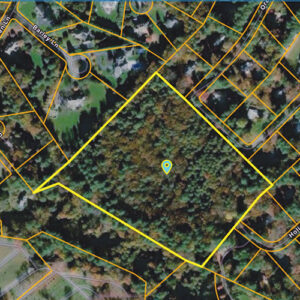
A 13.7-acre parcel of wooded land at 25 Holiday Road which is also known as the Orchard Lane parcel, has become a focal point for competing civic priorities: fiscal stability and housing production on one side, and school needs, neighborhood character, and conservation on the other.
The Select Board is seeking, through Town Meeting Article 16, $200,000 for preliminary engineering, appraisal, and related analyses studies intended to test redevelopment scenarios that include market-rate and affordable housing.
The School Committee has not formally voted to transfer care and custody of the land.
A Massachusetts Supreme Judicial Court decision, Harris v. Wayland (1984), held that land acquired “for school purposes” could be considered under school committee control, and that transferring care and custody for a different municipal purpose requires a two-thirds town meeting vote under the governing statute discussed in the case.
A neighborhood group has been organizing around Article 16 since January. They are opposed to authorizing funds for the study until the school committee decides what it wants to do with the land. These neighbors also have concerns about the proposed plans for the sites.
According to Orchard Lane resident Jennifer James-Young, residents are reacting to how town officials are making decisions. She said officials are making piecemeal decisions under pressure rather than a coordinated vision for the town, and residents want thoughtful, balanced decision-making. Her neighbors do not want growth at the expense of identity, environment, or fiscal responsibility. Residents, she said, struggled to access information and materials. They complained that the process was not transparent, felt unclear, inconsistent, or not followed.
“They are playing with residents’ tax dollars,” James-Young said. Some residents, she said, think the select board’s request is a way of “pushing their agenda.” She admitted some neighbors are also concerned about high density.
In the original meeting, she said town officials initially referenced an Alta Oxbow-type development, but the project is scaled back to multi-family housing, such as townhouses. She questioned, how much income would this actually bring? Who pays for the development of additional infrastructure, such as schools and roads? Why isn’t the Select Board focusing on developing Route 20 (Town Meeting Article 26)? “Why not go there?” she asked. There is already another large housing development that is generating taxes in the area.
Orchard Lane neighbor Mai Lan, who has an environmentalist perspective, said that Wayland needs to retain some conservation land to comply with Massachusetts’ guidelines that aim to permanently protect 28% of its land area by 2025 and 40% by 2050, as part of its Natural and Working Lands (NWL) sector goals. She said Wayland would need to roughly double its protected land to meet the 2050 target of 40%.
George Harris, who is responsible for the 1984 Holiday Road Supreme Court decision, said what the Select Board is proposing “does not make sense.”
“Why spend $200,000, ” he said, “for a study until they have control of the land?” He said that the request for funding a study is a different issue, but the 1984 ruling confirmed that “the School Committee has every right to determine the future use of the land.” The town does not need a study to sell the property to a developer, Harris said.
In addition to the legal and procedural hurdles, the Holiday Road site’s physical characteristics pose some engineering challenges:
Groundwater protection: The land is located within critical groundwater protection zones (Zone I and/or Zone II) for town wells. Development in these areas is strictly regulated to prevent contamination of the public water supply.
Flooding risks: The Conservation Commission has flagged concerns regarding potential flooding and the impact on local habitats if the intact woodland is cleared.
Zoning requirements: Any housing project would likely require a Special Permit or a zoning change (such as a multi-family overlay) to be economically viable, both of which require high levels of public and board approval.
Representatives from the Select Board and School Committee did not respond for comment on this story.
However, the Select Board members disclosed their objectives at their March 9 meeting. They said they want to determine the site suitability for various uses before making a final decision on how to use the land. According to their discussion, this study will provide the technical data needed to decide if the land is even buildable. They view this as a potential way to increase “new growth” and reduce tax burdens by exploring the sale or redevelopment of the land.
Select Board members argued that without professional engineering and an appraisal, the town would continue to debate the same “what ifs” without progress. Town manager Michael McCall and Select Board Chair Carol Martin said this is part of a broader long-term strategy to manage all town-owned properties efficiently.
McCall, Martin, and select board member Thomas Fay also said during the meeting that Wayland faces increasing pressure (and legal requirements like the MBTA Communities Act) to create diverse housing options.
Fay said at the meeting that “the study is neutral,” adding that it might conclude that the land is unsuitable for development due to water or soil issues, which would provide the evidence needed to move toward conservation. McCall and Select Board member Bill Whitney discussed several non-housing outcomes the study could identify for the land‘s future use, such as municipal solar, DPW needs, or specific recreational facilities.
The board stated in the official town warrant that the study would be a joint initiative between the Select Board and the School Committee, as the land is currently in the School Committee’s custody.
Whitney said at the meeting, “sometimes it is better to ask for forgiveness,” in reference to waiting for the School Committee’s decision.
The School Committee has no current plans to build on 25 Holiday Road, but they have formally reserved the site as a strategic asset for future educational needs. While the Select Board is pushing to study the land for housing, the School Committee has emphasized its desire to maintain control of the parcel to keep all future options open.
Orchard Lane resident Andrew Carpenter and members of the School Committee framed this joint oversight as a defensive measure during the February 4 School Committee meeting. By agreeing to “joint direction” of the Article 16 study, the committee said they are ensuring they have a veto or significant influence over any proposal that might involve selling or repurposing the land.
It was noted that because the land cannot be transferred without a School Committee vote and a two-thirds town meeting majority, having “joint direction” over the study prevents the Select Board from pursuing a redevelopment plan that ignores school needs. Both school committee members, Erin Gibbons and Erin Mueller, emphasized at their Feb 4 meeting that the school committee is not “giving up” the land by agreeing to a study; rather, they are participating to ensure that school bus parking or a future school building is still an option.
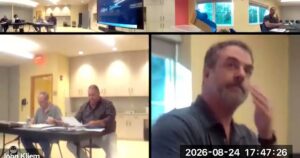
The Select Board held a public forum on April 13. All but two of the attendees were neighbors from the Holiday Road/Orchard Lane area, according to Martin’s poll. Whitney read Article 16, which listed the select board’s reasons for the study, which are outlined above. Most of the neighbors conveyed the same concerns as those listed above.
However, there were some new comments. Tom Hammond of Orchard Lane recommended that the Select Board create an advisory committee to study the project and requested that they include neighborhood residents. When a few residents said $200,000 seemed like a lot of money to answer what the town should do with the land, Fay said it was the maximum cost and it would probably be completed for less.
Two residents asked what the costs were for building the infrastructure (utilities and roads) and who was responsible for those costs, the town or a developer. The board did not answer those questions.
Another neighbor asked if the area would be rezoned to accommodate 50 townhouses. Fay said he heard that rumor, but no numbers were discussed. Responding to James-Young’s comments about conservation land, Whitney said building townhouses and conservation land are not mutually exclusive. They could consider a combination.
Elisa Carter said she did not want to authorize more money for the study, “If the school committee wants to build there, let them pay for the study; they get 70% of our taxes.”
Harris questioned the timing of the school committee’s involvement since they were not aware of the study until a neighbor advised them. Martin admitted they were under pressure to present a more detailed plan for growth by January 28.
David Bernstein of Glezen Lane was the last to speak. He said his research indicated the costs should be significantly less than $200,000. He recommended not spending the money on the study now, forming an advisory group “to fully investigate all alternatives.” He reminded the select board members that the school committee will not make its decision on its major long-term options for its PK-8 facilities study until the end of the year.
At Fay’s suggestion, the select board members agreed to continue discussion on Article 16 at their April 27 meeting. He suggested they reflect on what was discussed at the public forum, and “what they know and don’t know.”