By Barbara Heffner
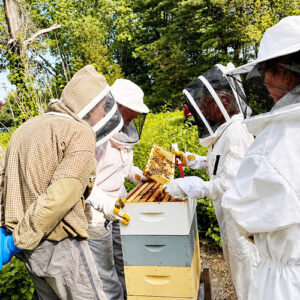
A beekeeping team from First Parish in Wayland has tended hives near the Wayland Community Gardens on the east side of Old Sudbury Road for several years. The bees and the gardens have a symbiotic relationship: the plants nourish the bees, and the bees pollinate the fruits, vegetables, and flowers grown in the Community Gardens.
Bees are vital pollinators who are essential for ecosystem health, biodiversity, and global food security. They fertilize over 75% of flowering plants and 35% of food crops, allowing for plant reproduction and the production of fruits, vegetables, and nuts. Bees also support biodiversity, sustain ecosystems, and provide products like honey, beeswax, and propolis.
Bees are also responsible for the beautiful spring landscape. As poet Emily Dickinson said, “The lovely flowers embarrass me; they make me regret I am not a bee.”
However, bees’ activities are not limited to spring and summer. Contrary to what most people may think, bees don’t hibernate in winter. They cluster together in their hives, with the queen in the center, and they vibrate for warmth by constantly rotating positions, moving from the interior to the exterior of the cluster.
For fuel over the winter, the bees consume the honey that they worked all year to make. If they were especially industrious — as some of the colonies were last season — they made more honey than they needed. Thus, the beekeepers were able to harvest and bottle it to sell to the First Parish community this past fall. Sadly, there is not sufficient yield to sell it to the broader community.
“The lovely flowers embarrass me; they make me regret I am
not a bee.”
— Emily Dickinson
The income enables the team to replace worn-out hive components, buy treatments for parasites, such as mites, purchase protective gear, and cover other expenses. The team also donates a percentage of proceeds to a local charity.
The six Parish Church beekeepers were also busy during the winter. They took an online class to increase their knowledge and hone their skills. The Norfolk County Beekeepers Association offered the nine-week intermediate beekeeping class. Covered topics include sustainable beekeeping, colony management, queen survival, and pest management. It also included a review of new treatments and bee breeds expected to be more resistant to mites. The team aims to put this knowledge to good use this summer in caring for their three hives.
With the warming weather, the team can peek into the hives and add supplemental sugar bricks if the winter honey stores are running out. Sugar is not as nutritious for bees as honey, but it can be a lifesaver at the end of a long winter. The team has also been meeting to decide on upcoming purchases and plan for the upcoming season.
Their mission is also to educate; the team members look forward to teaching a popular “bee unit” at the Wayland Creative Preschool each year.
If you’re interested in bees or beekeeping, contact the First Parish Bee Team at sac@uuwayland.org.