dave.watkins@waylandpost.org
Voters at Wayland’s annual Town Meeting approved a $112.9 million fiscal 2027 operating budget, a $9.4 million capital spending plan, and $38.6 million in borrowing for a new water treatment facility Monday night, then returned Tuesday to narrowly approve a contentious Route 20 multifamily zoning change opposed by several major town boards.
The two-night meeting highlighted mounting tensions over the town’s long-term financial outlook, housing strategy and infrastructure needs, with repeated warnings from town officials that Wayland will most likely face override votes in coming fiscal years if new revenue sources and development opportunities are not pursued.
Finance Committee member Phil Giudice presented the fiscal 2027 operating budget Monday, describing a spending plan that increases overall expenditures by 4.6% while keeping the property tax increase below 5%. Voters approved the budget 256-19.
Town Manager Michael McCall said the town confronted a nearly $2 million budget shortfall last summer that officials closed through a hiring freeze, refinancing efforts and a special election authorizing the conversion of levy debt to excluded debt. McCall said the administration worked to avoid deeper cuts or larger tax increases while preserving town services.
“We have demonstrated to you through being fiscally conservative, having hiring freezes and finding alternative ways of closing the gap without raising taxes that we have been good stewards with your money,” McCall said.
McCall also noted that Moody’s reaffirmed Wayland’s AAA bond rating last fall.
The longest debate Monday centered on a $250,000 capital request for cybersecurity remediation and modernization, including expanded video surveillance systems at town buildings, schools, and the Wayland Public Library. Susan Kaufman of Sherman Bridge Road moved to delete the line item, arguing the proposal lacked sufficient policy safeguards and public discussion.
IT Director Nicholas Lombardi, who said he attended the meeting despite having pneumonia, told voters the town’s technology systems are more than two decades old and increasingly vulnerable to cyberattacks. Lombardi said the proposed cameras would primarily cover building exteriors and selected interior locations, with footage stored on local town servers and access restricted to authorized personnel.
Questions from residents and board members focused on camera placement, data retention policies, and whether outside agencies could access footage. Iris Hawksell of Plain Road raised concerns about possible federal access, including by immigration authorities. Acting Police Chief Mark Ebert said the department has resisted entering agreements with outside license plate reader companies, including Flock.
Supporters of the surveillance proposal cited past vandalism incidents and public safety concerns in parking lots and public buildings. Voters rejected Kaufman’s deletion motion 178-61 before approving the full capital plan 224-15.
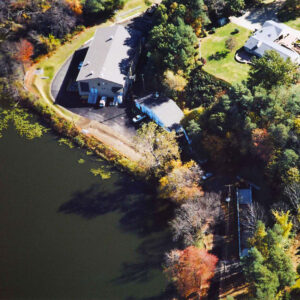
Town Meeting also overwhelmingly approved a $38.6 million borrowing authorization to construct a water treatment facility at Happy Hollow and connect the town to the Massachusetts Water Resources Authority system. The measure passed with roughly 95% support.
Board of Public Works Vice Chair Michael Wegerbauer said none of the town’s existing water supplies will comply with the federal PFAS drinking water standard taking effect in 2029. He warned that delaying construction could jeopardize a $7 million MWRA entrance-fee waiver currently available to Wayland.
Another significant issue Monday involved Article 16, which proposed funding a preliminary engineering study for the 25 Holiday Road property. The Select Board indefinitely postponed the article after School Committee members raised concerns that the 13.7-acre parcel could eventually be needed for future school construction. Board member Bill Whitney noted the site had originally been acquired for school purposes approximately 70 years ago and had recently been identified by school consultants as a possible elementary school location.
Second night
Tuesday’s session focused heavily on zoning and land-use questions, particularly Article 25, a Planning Board-sponsored amendment affecting the Route 20 West Multifamily Housing Subdistrict near the Sudbury line.
The amendment increased maximum density from 20 to 32 dwelling units per acre and raised allowable building height from 35 feet to 58 feet on a 7.8-acre parcel near the Longfellow Club. After extensive debate, voters approved the measure 87-72.
Planning Board Chair Annette Lewis argued the changes were necessary because the site’s topography and prior zoning restrictions made development financially impractical. Lewis said much of the parcel sits approximately 25 feet below Route 20 grade, meaning taller structures would appear lower from the roadway than existing nearby apartment buildings at Alta Oxbow.
Opposition came from an unusual coalition that included the Select Board, Finance Committee and Economic Development Committee. Select Board member Tom Fay argued the proposal permitted oversized buildings too close to Route 20 without sufficient design protections.
“New buildings will stand for likely 100 years,” Fay said while urging Town Meeting to reject the article pending further study.
Fay noted that the Select Board voted 3-2 against the article, the Finance Committee split 1-3-2 against it and the Economic Development Committee twice unanimously requested further revisions. Select Board member Ann Brensley, who described herself as a strong supporter of housing production and economic development, also opposed the measure.
Supporters countered that additional commercial tax revenue and multifamily housing development are increasingly necessary as Wayland confronts long-term fiscal pressures. McCall warned that continued resistance to development could increase the likelihood of future override requests and potentially threaten the town’s top-tier bond rating.
Town Meeting also approved several other Planning Board articles Tuesday, including housekeeping zoning amendments, floodplain bylaw updates aligning with FEMA standards and expanded accessory dwelling unit regulations permitting larger ADUs through special permits.
Three citizen petition articles concerning Sherman Bridge Road generated extended discussion but largely failed. Voters rejected a proposed heavy commercial vehicle ban after town counsel and Select Board members said Wayland could not impose such restrictions without Sudbury and MassDOT approval. Additional petitions concerning reduced speed limits and signage also failed, while several related articles were indefinitely postponed.
Town Meeting concluded shortly before 10:30 p.m. Tuesday after completing all remaining warrant articles.