By The Wayland Post
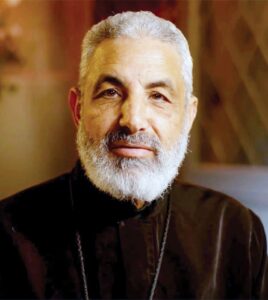
WAYLAND — A Middlesex Superior Court judge has refused to dismiss former Superintendent Omar Easy’s discrimination lawsuit against the town, ruling that a jury should decide whether Wayland officials used concerns about his performance as a cover for racial bias.
In a decision dated July 10, Superior Court Justice Asha White denied the defendants’ request for summary judgment on every remaining count. Easy’s claims of discrimination, retaliation, coercion, aiding and abetting, interference with his employment contract and breach of contract can now proceed toward trial.
The decision is not a finding that Wayland, former School Committee members Christopher Ryan or Ellen Grieco discriminated against Easy. It means the evidence is sufficiently disputed that a judge cannot resolve the case without a trial.
“The jury, not this Court, is in the best place to parse through the evidence,” White wrote.
The ruling exposes the accusations, private conflicts and competing investigations behind Easy’s abrupt removal from the school district in February 2023 — an episode the School Committee discussed largely behind closed doors while declining to explain publicly why its superintendent had been sidelined.
Easy was selected in February 2021 and became Wayland’s first Black superintendent when he began work that July. At the time, the School Committee said it was “delighted” by its choice and described Easy as “thoughtful, articulate and inspiring.”
Less than two years later, he was placed on indefinite paid administrative leave and replaced by a white male superintendent.
Allegations of bias from the beginning
According to the court decision, the School Committee that selected Easy was composed entirely of white members. Two of the three finalists for the superintendent’s position were Black.
Easy alleges that Grieco suggested during the selection process that Black people were not capable of serving as leaders. The decision does not provide the precise statement, its context or Grieco’s response to the allegation.
The friction allegedly continued during contract negotiations. Easy requested money to hire a local mentor for professional coaching. The committee initially rejected the request but later permitted him to proceed after discussing the matter in executive session.
Easy contends that the mentor, his evaluations and other aspects of his employment received a level of scrutiny not applied to white superintendents.
The dispute intensified after racist incidents inside the schools.
In December 2021, racist graffiti was discovered at Wayland Middle School, including the N-word and messages calling for Black people to leave the district, according to the ruling. Easy proposed installing hallway cameras, but administrators resisted.
Easy alleges that one administrator accused him of “bringing Everett culture to Wayland,” a reference to the more racially diverse school district where he had previously worked. The following year, Easy says the committee pressured him to abandon a harassment prevention order he had obtained against a town employee. Easy alleges that the employee called him a “thug” and made other racially charged comments.
The word would later become significant in his lawsuit. Easy argues that committee members and administrators interpreted his behavior through the stereotype of an “angry Black man,” characterizing his passion and direct management style as aggression.
Competing investigations
The town’s defense centers on Easy’s performance rather than his race.
Complaints arose after Easy conducted evaluations of district administrators in the summer of 2022. A third-party investigation found that he had not fully complied with district regulations and policies, according to the court decision.
Another confrontation followed an Oct. 13, 2022, Administrative Council meeting. Easy discussed the rollout of a math program and an investigation into the treatment of a Black teacher. Some administrators complained that he had bullied employees and behaved aggressively.
But an independent investigation into those allegations reached a markedly different conclusion: It found no workplace bullying, intimidation or harassment.
That clash — an investigation criticizing aspects of Easy’s administrative conduct and another clearing him of bullying accusations — is among the factual disputes a jury could ultimately be asked to sort out.
The situation became more combustible on Dec. 21, 2022, when racist graffiti explicitly targeting Easy was discovered on an exterior wall at Wayland High School. The message paired his first name with the N-word.
The incident drew widespread attention and prompted a special School Committee meeting. Residents and school officials publicly condemned the graffiti, while Easy warned that the vandalism, racial taunts, and what he described as repeated microaggressions reflected a hostile working environment.
On Jan. 19, 2023, Easy notified the School Committee that he believed he was experiencing unlawful discrimination and retaliation and was preparing to file a complaint with the Massachusetts Commission Against Discrimination.
Twenty days later, on Feb. 8, the committee placed him on paid administrative leave.
The timing forms a central part of Easy’s retaliation claim.
Judge finds enough evidence for trial
Ryan and Grieco argued that the investigations and employment actions resulted from Easy’s performance and management, not racial animus.
White found that Easy had produced enough contrary evidence to challenge that explanation before a jury. She cited the racist graffiti and alleged microaggressions, Easy’s claim that he endured investigations not imposed on white superintendents, and the decision to place him on leave shortly after he raised discrimination concerns.
The judge determined that Easy had established an initial, or prima facie, discrimination case for purposes of defeating summary judgment.
Easy’s argument that the stated performance concerns were a pretext for discrimination also could not be resolved without assessing witnesses’ credibility, White ruled.
“The ultimate issue of discrimination” cannot be decided from affidavits when the two sides present conflicting evidence about officials’ motives, the decision said.
White similarly allowed Easy’s retaliation, coercion and aiding-and-abetting claims to continue because all depend on the unresolved question of whether racial bias created additional pressure and scrutiny in his workplace.
The judge also preserved Easy’s claims that Ryan and Grieco improperly interfered with his employment relationship and that the town breached his contract. Those allegations involve executive sessions concerning his mentor, reimbursement requests and administrator evaluations.
Wayland argued that no contract was broken and that Easy himself violated the agreement by hiring a mentor without prior approval. Easy contends the town’s handling of the matter violated the contract’s implied requirement of good faith and fair dealing.
Three years of fallout
The committee hired former Newton Superintendent David Fleishman as acting superintendent in 2023 while Easy remained on leave. The turmoil also preceded the resignation of committee member Jessica Polizzotti, who said in May 2023 that she was unable to reconcile her “morals and values” following months of controversy surrounding the investigation and leave decision.
Public records later showed that Wayland continued paying Easy’s six-figure salary for at least 15 months after placing him on leave, even after he obtained an athletics administration position at Penn State.
The Wayland Post reported in 2025 that Easy’s discrimination complaint sought $5 million.
The trial is scheduled for April 2027.