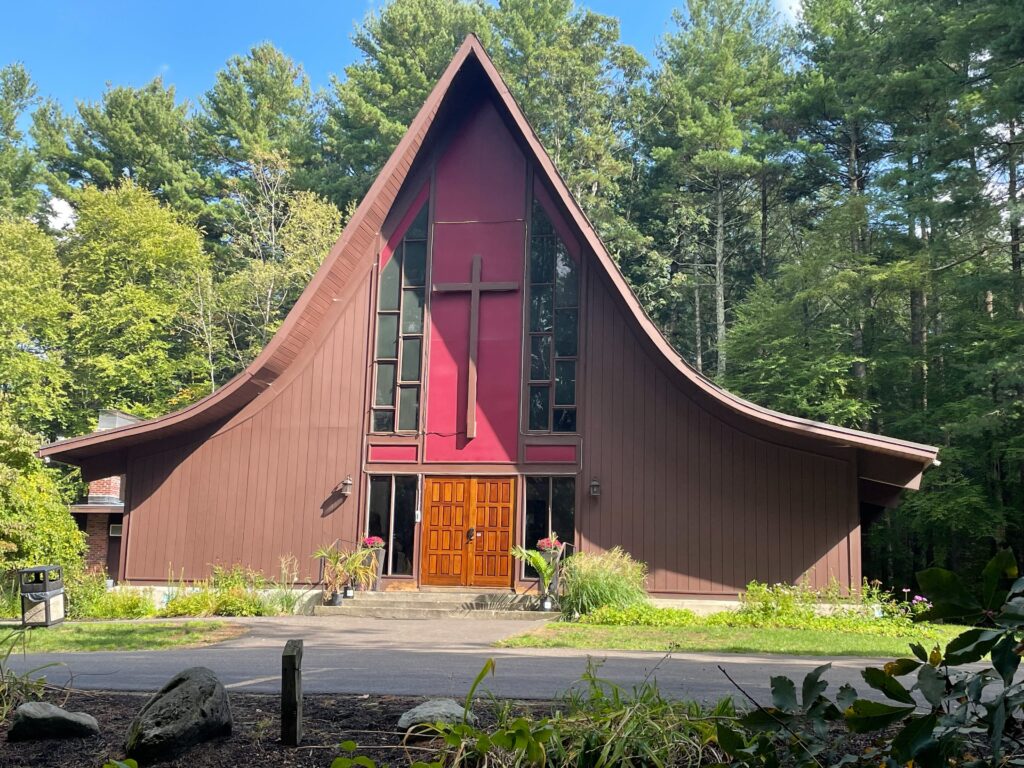
The Conservation Commission on April 15 voted 7-0 to deny both a Notice of Intent for any significant work in the buffer zone or in a Wetland Resource Area required by the Wetlands Protection Act, and related Chapter 193 stormwater permit for a proposed redevelopment at 169 Rice Road by the Saint Philopater Mercurius & St. Mina Coptic Orthodox Church. ConCom concluded after multiple hearings that the project could not be conditioned to meet local and state performance standards.
The application, first filed in August 2025 and revised multiple times, proposed demolition of the existing church and construction of three new buildings, expanded parking areas, a courtyard, a sports field and associated stormwater systems. Portions of the work were located within the 200-foot riverfront area of Snake Brook and the 100-foot buffer zone of Bordering Vegetated Wetlands.
Attorney for the applicant Jonathan Silverstein said the project now complied with the state Wetlands Protection Act (310 CMR 10.0), and Wayland’s Wetlands and Water Resource Protection Bylaw (Chapter 194), and Stormwater and Land Disturbance bylaw (Chapter 193)
He argued that revisions had reduced impervious surface within the riverfront area from a slight increase to a net decrease and resolved all comments from the Planning and Conservation Boards and their peer reviewers. Silverstein added that the church was not seeking relief from state environmental standards but maintained that local discretion should not be used to force a reduction in project size.
Commissioners focused their discussion on three primary issues: stormwater performance, impacts within the riverfront area, and adequacy of mitigation for tree removal and habitat loss. While the town’s stormwater peer review found the stormwater design acceptable under state standards, additional comments from the abutter’s peer reviewer submitted shortly before the hearing challenged that conclusion, asserting that the HydroCAD model overstated storage capacity and could result in increased runoff during large storm events.
Members said the competing technical analyses, combined with unanswered MassDEP technical comments dating to the original filing, left uncertainty about whether the stormwater system would meet required performance standards outlined in the Massachusetts Stormwater Handbook which aim to protect water quality and manage runoff effectively. The standards require stormwater management systems to be designed to handle increased precipitation due to climate change, ensuring that post-development peak discharge rates do not exceed pre-development rates.
The commission also revisited peer review concerns about the extent of work in the riverfront area that had raised questions about whether the project adequately protected wildlife habitat functions, particularly given the clearing of mature forest along Rice Road. Commissioners said the applicant had not sufficiently demonstrated that their proposed plantings would replace those functions.
The applicant’s engineer responded that the site is already bisected by Rice Road and that the revised design reduces impervious area while restoring portions of the buffer with new plantings.
Commissioners pointed out that the project design had remained largely unchanged despite repeated feedback over several hearings and indicated those measures did not resolve their concerns.