If you can’t adapt and be creative during high school spring preseason practices, you put yourself behind most of your opponents.
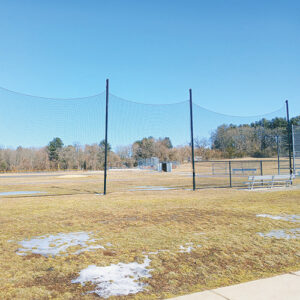
Spring in Massachusetts is unpredictable, difficult, and of course, cold and wet, meaning that the use of grass fields is limited so they can withstand the year-round conditions. Athletes’ safety comes into play when considering whether to go outside or not in harsh elements or on wet surfaces.
“[Being in] New England definitely forces you to be flexible,” said Sarah Woodside, Wayland High School softball coach. “It’s definitely part of the job up here — you have to embrace it. Of course, it can be frustrating, especially early in the season when you’re trying to get into a rhythm and you’re constantly adjusting plans.”
The Warriors baseball team is in the same boat as Woodside’s girls, having to wait until the fields are dry.
“The kids are definitely itching to go [during the preseason],” coach Chris Fay said. “They want to get outside and scrimmage and get into some games. But it’s the reality of New England baseball.”
For Wayland coaches, it falls on them to come up with innovative ways to get their players ready for the season. And since spring is the shortest of the three high school sports seasons, time can’t be wasted.
Allison LaClaire, who coaches the boys’ and girls’ outdoor track teams with Tim Glavin, has used classrooms for yoga or even the common area in the school for other indoor activities.
Girls’ tennis coach Jason Tassinari will find an open classroom for video sessions or team bonding. “We’ll give a little education about the sport or maybe for some of the new players we will give a refresher on rules,” Tassinari said. “We might do a session on the whiteboard.” Both the baseball and softball teams can go over situational plays like what to do on a bunt with runners on base or where a cutoff throw should go.
Woodside finds the indoor work to be paramount for a successful season “At the end of the day, I believe the best teams are the ones that are connected off the field first,” she said.
Thankfully for Wayland teams, the field house is available. But finding time and space is difficult with hundreds of kids vying to use the court, track, and weight rooms.
“Our field house is jumping after school this time of the year,” Tassinari said. “From this time of the year until mid-April, finding a place to practice is one of the challenges coaches face.”And when a team does get its turn in the field house, having a plan is essential.
“There’s a lot of coordination that goes into it with multiple teams needing access, so flexibility is key,” Woodside said. “We have to be really intentional with how we structure [indoor practices] — smaller stations, rotating groups, maximizing the space we have. It forces us to be efficient, which honestly can be a good thing.”
When teams do finally get outside, if grass fields are still not usable, then the turf field is no different than the field house –—too many kids and not enough space.
Some teams can get outside much more easily than others; for example, the track teams can do a quick run. It’s all about education, said LaClaire.
“We are mostly outside; it’s rare that we stay inside,” she said. “If it is spitting [rain] out or cold, we’ll run and then send them home. You have to remember, we’re training for meets. We may have a meet when it’s 42 degrees and spitting rain. We talk a lot about it at practice. We tell them that we are not here to torture them but teach them how to get through difficult weather.”
Tassinari, the third-year tennis coach, is sure to let the girls know that most other teams are dealing with the same issues. “I tell the team that we are not alone,” he said. “Everyone playing in the area is dealing with the same thing. We are not ahead or behind.”